Rajnath Singh Exposes Post-Truth Politics: Refutes Opposition’s Allegations on EVM, SIR, and Election Commission
3 min read
 By • Published 19 Oct 2026• Updated 19 Oct 2026
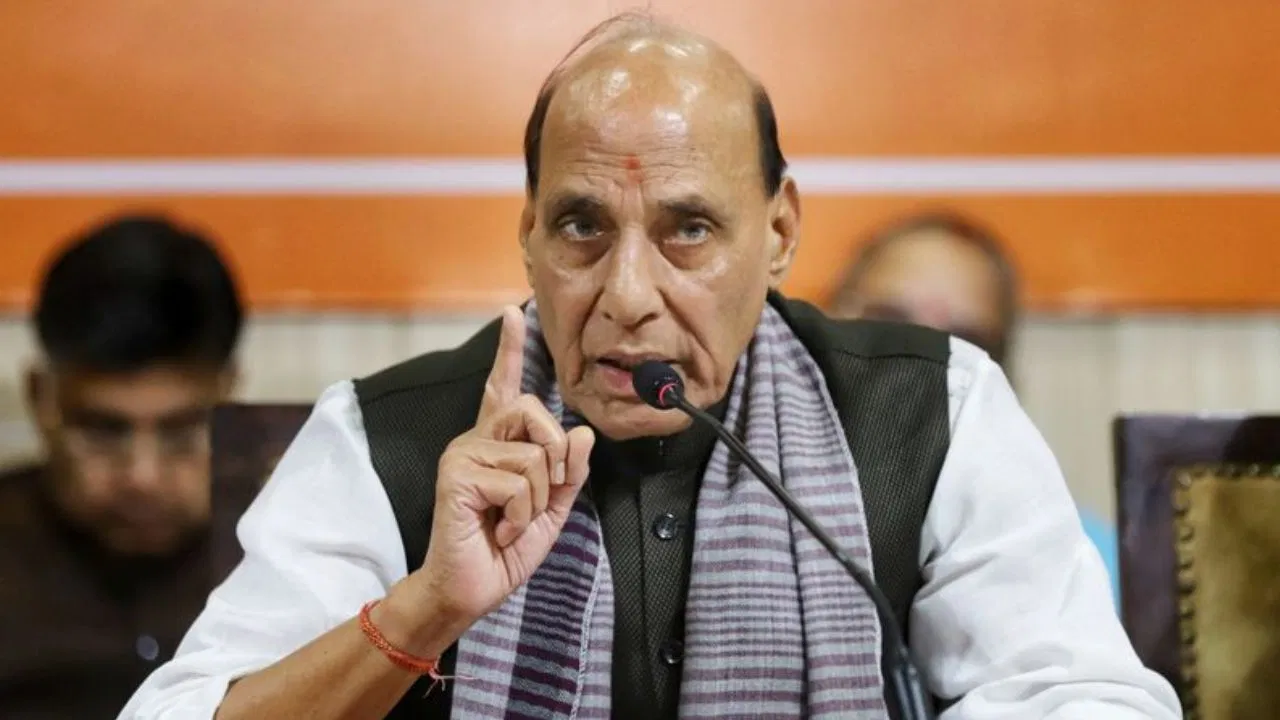
Defence Minister Rajnath Singh today described the opposition’s repeated election-related allegations as weapons of falsehood and propaganda through an article. He termed the ongoing controversies regarding Electronic Voting Machines (EVMs), Special Intensive Revision (SIR) of voter lists, and the credibility of the Election Commission of India (ECI) as part of ‘post-truth’ politics.
Key Points
- Opposition’s allegations on EVM, SIR, and ECI are deliberate attempts to spread misinformation.
- The Supreme Court dismissed all doubts related to EVMs in 2024 and rejected demands to revert to paper ballots.
- In 2025, the Supreme Court declared the purity of the voter list a constitutional obligation and upheld the SIR process as valid.
- The appointment process of the Chief Election Commissioner has been institutionalized through a multi-member selection committee including opposition leaders.
- Rajnath Singh warned about the negative impacts of post-truth politics on national security and democratic institutions.
Defence Minister’s Response to Opposition Allegations
Rajnath Singh stated that certain opposition groups are continuously trying to confuse public opinion and erode trust in democratic institutions through false accusations. Defining the term ‘post-truth,’ he explained that in this era, emotional appeals and distorted narratives often overshadow solid facts.
Allegations on EVMs
The opposition has repeatedly alleged manipulation of EVMs, but the Supreme Court in 2024, in the case of ‘Association for Democratic Reforms vs. Election Commission of India,’ dispelled all doubts. The court stated that raising questions based solely on suspicion without concrete evidence is condemnable.
Controversy Regarding Special Intensive Revision (SIR)
Rajnath Singh noted that in 2025, the Supreme Court recognized the purity of the voter list as a constitutional duty and validated the SIR process. He emphasized that this process is essential for free and fair elections and should not be questioned for political gains.
Related Stories



Continuous Campaign Against the Election Commission of India (ECI)
The minister said that for seven decades, Congress governments exercised executive control over the ECI and the appointment of the Chief Election Commissioner, which the current government has institutionalized through a multi-member selection committee. Opposition leaders participate in this committee, making the process more transparent.
Examples of Post-Truth Politics in History
Rajnath Singh cited examples such as the 1951 constitutional amendment by the then government limiting freedom of expression, exclusion of judicial review during the Emergency, and granting immunity to high offices. He said these events weakened democracy and were precursors to today’s post-truth politics.
Comparison with the Current Government
The minister compared the respect shown towards the Constitution during the Modi government’s 12 years. He mentioned that the Supreme Court struck down the 99th Constitutional Amendment Act, and since then, no attempts have been made to legislate through ‘backdoor’ means. The construction of the Ram Temple, abrogation of Article 370, and repeal of farm laws also reflect this respect.
Dr. B.R. Ambedkar’s Warning
Rajnath Singh recalled Ambedkar’s speech on the ‘Grammar of Anarchy,’ stating that dissent should not be based on falsehoods. While democracy allows freedom of dissent, such dissent must not harm social peace and institutional trust.
Conclusion
The Defence Minister concluded that opposition leaders should understand true democratic principles and adopt fact-based debates instead of post-truth politics. He appealed to all political factions to express dissent based on truth and not spread chaos through false claims and propaganda.
Comments
0